With Eleanor Amari
Eleanor Amari on Creative Vision, Brand Culture, and Why Most Content Falls Flat
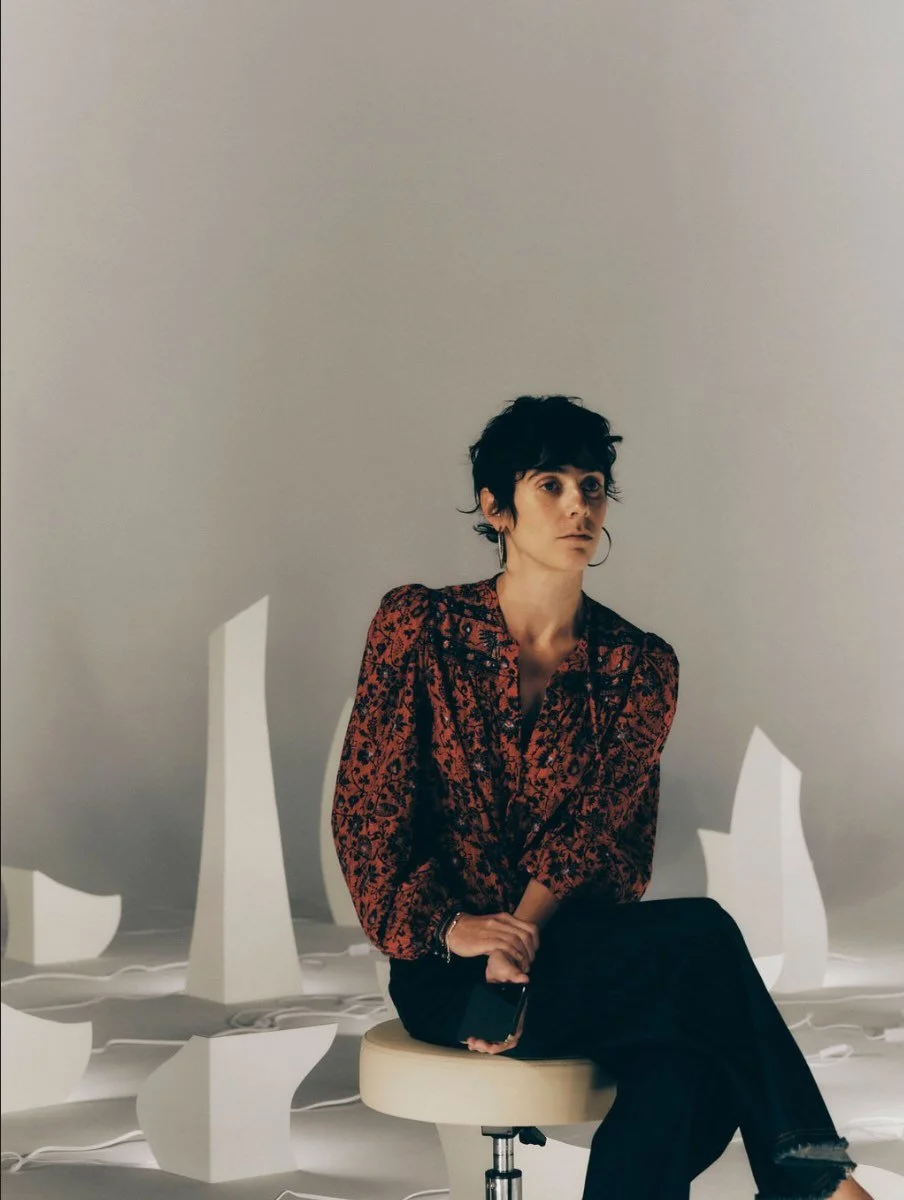
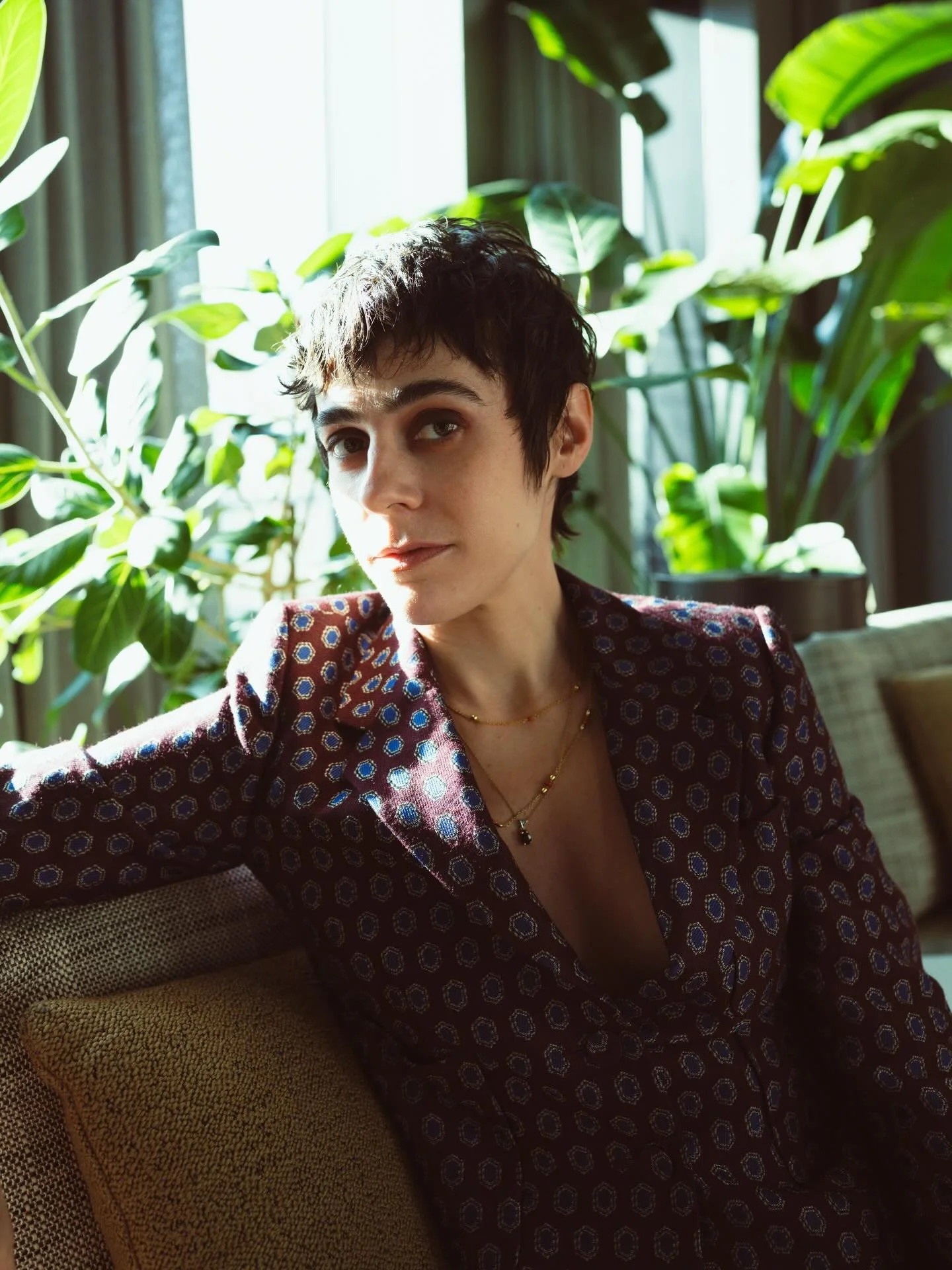
Eleanor Amari has built her career at the intersection of architecture, design, and brand. From early experience at SOM, to shaping communications inside Kelly Wearstler’s studio, to serving as Creative Director at DADA Goldberg, she has operated behind the scenes of some of the most visible names in the design world. Her work has spanned social architecture, brand systems, real estate marketing, personality-driven storytelling, and cultural positioning.
Now, as she steps into her own chapter, Eleanor reflects on what it means to build a brand around a person, how digital presence has evolved from aesthetic to ecosystem, and why so much content that “looks good” ultimately falls flat. In this conversation, she talks about authorship, creative authority, brand culture, and what actually makes work resonate beyond the scroll.
What was it like working at Kelly Wearstler?
Working at Kelly was a creative unlocking. She is a can't-stop, won't-stop entrepreneur, and her grind is intensive, but there's real energy behind everything she touches. Stagnation was never really a sensation in that studio. There were about 50 people when I was there, and the space had this natural ebb and flow, which is pretty common for a creative environment that's actually alive.
On one side of the office were the architects and interior designers. On the other, a blend of her commercial line creatives: the designer of her lighting collection, her fabric collection, her paint line. And then there was the marketing team. We had our little cube. Social media was a rigorous partnership with her, and she had an incredibly sharp eye on all of it.
What I took away most from her process was this: if you can see it, it can be done. And once you see it, you have to commit fully to that creative vision. She modeled that every single day.
Can you describe a day in the life working at kelly wearstler?
It was having, like, 8 to 10 possible pieces of content in motion at any given moment. New ideation happening on one end, content dying a graceful death on the other. You had to be ready for any whimsical creative need at any time. It was extremely fast-paced. Everything revolved around her, because when a single person is the brand, every key decision runs through that person's eye. It was highly iterative. You'd bring something to her, she'd give you her razor's edge take, it would come back to the team, you'd interpret what she was asking for, develop multiple versions, bring it back, and she'd say, go here, or go do this. That cycle was constant.
What was the most meaningful project you worked on at Kelly Wearstler?
The most meaningful project I did at Kelly was actually the seed for everything I then built at DADA Goldberg. At the time, editorial layouts, integrating branding and mixing typography with photography, that was the thing. We built that out for both her personal profile and her ShopKW profile.
I worked closely with Drew Frist, a collaborator I deeply value, and together we created essentially a social media template program. This is how we talk about this in this scenario. This is how we're going to promote the next product launch. There was a whole magazine architecture underneath it all and the design drove the thinking.
That was the material I brought with me to DADA.
Can you talk about a couple of projects at DADA GOLDBERG that shaped you creatively?
So big picture 50% of our portfolio was consistently real estate. And I love, loved, love all of the clients I worked with at DADA Goldberg. Each one offered something really different.
Obviously the early clients were so amazing and important, they believed in us before other people. So that was such a treat to iterate and make all of these mistakes behind the scenes and then present the work to the client and get the “wow this is working!” and then iterate and keep going from there.
One that stands out is Prospect Refuge Studio, a small design firm out of Minneapolis. Total willingness to experiment. We made some really sick, really experimental content together. Victoria was our first personality client. From there on out, the personality clients were consistently so much fun because it was time to get funky. If it’s you, and you’re representing you, we don’t need a simple static pose. We need more fluidity and creativity to truly be seen.
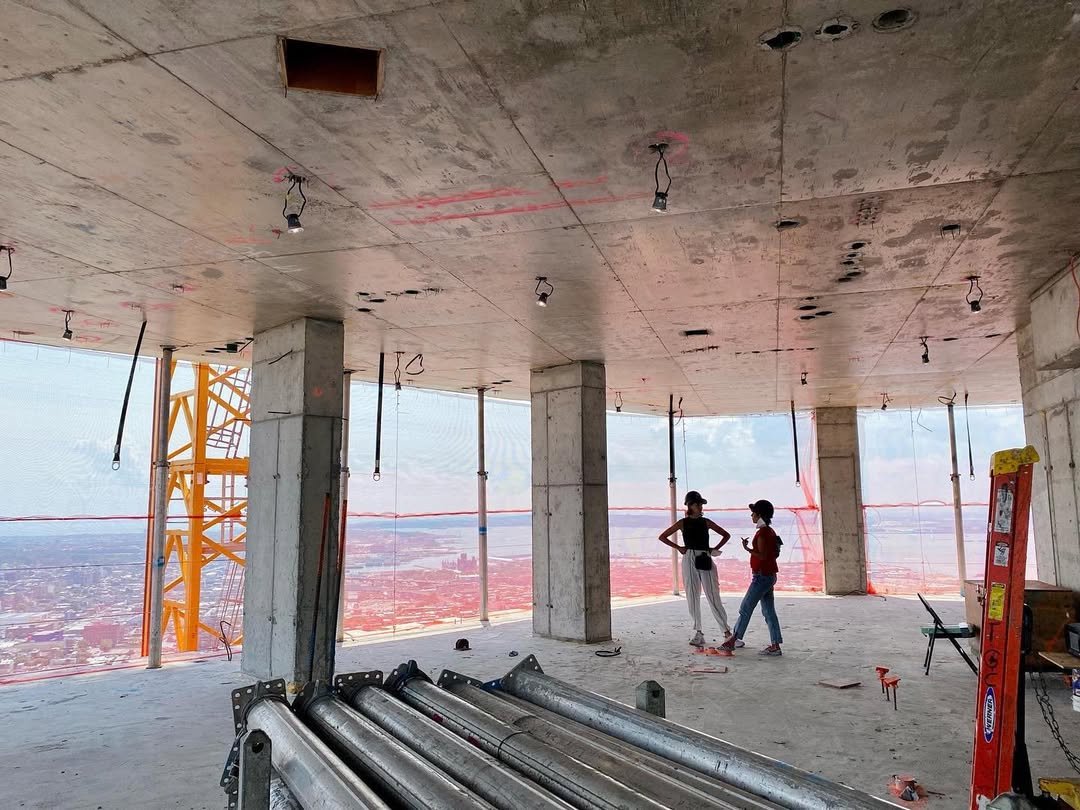
Our first big breakthrough real estate project was The Brooklyn Tower, designed and developed by JDS Development Group. They were ready to light it up. Marci Clark, who leads their strategy, and Lexi Copithorne—who has since launched her own brand, Balletic Athletic—gave us a chance. They could feel we had something different. We created something bold. That project was special because the scale was so significant and symbolic.
And then one that was completely different: the John Chamberlain Estate. John Chamberlain was a sculptor from the Warhol era, known for these massive works he made by crumpling cars. The Estate brought us on to revive his story and continue his legacy. They released a book called Living with Chamberlain through Assouline. I art-directed the photography and the brand film for the launch. That one was really special.
What’s the difference between content that looks good and content that works?
Content that looks good is a really wide net. There's a lot of stuff that's a cool, shiny thing. Content that works actually shapes your perception.
Looking good starts with strong photography and strong videography. That's the baseboard, and it's more underestimated than people realize. The website should be beautiful, but it can be a small website. Social media is where people go to discover what your brand is actually about, and that is content-first. Beautiful content is like a beautiful outfit. It makes you feel something, it signals something. But it only works when it's moving perception, clarifying a positioning, shaping desire.
The best formula I've found is about 70% creative, 30% brand strategy. The biggest mistake is flipping that ratio. When 70% goes to the marketing brain, that's when it gets oversaturated, when it loses its feeling.
What do you think is actually driving awareness today, and what's mostly noise?
What's driving real awareness is content that exists both online and offline. The content needs to be the best face-forward expression of something that's actually happening in the world, not just on a screen.
The wardrobe analogy works here. You can get dressed up for yourself, and that's great, but it doesn't make an impact if you're just sitting in your apartment alone. It only lands when you go out, you're seen, you feel good, you're with your people. That's the purpose of really good content and really good branding. It's to get people with you.
What content has inspired you recently?
I typically reference really big brands for clout and credibility, but my heart always goes to small brands for innovative ideas. I really love two jewelry brands right now, one is called Simuero, and the other is Sauer. They're not perfect, they could benefit from better photography, but they're doing really cool things. Sauer released a campaign with a red background and a black swan. The swan is the protagonist of the narrative, and the jewelry becomes part of its movement. It's a video campaign on Reels and it's so cool.
For bigger brands, I'm not going to lie, I'm a sucker for beautiful models. It makes such a difference. There's a passion and energy there, and that's really a testament to the photographer who has been able to vibe off of that person and translate it into something emotional. When it works, it stops you completely. You just look up and you're hooked.
If you had a blank slate with a real estate developer, what would you pitch?
I'd shrink the budget for everything that's already being done in development marketing significantly, make it super streamlined and efficient, and then use the rest of that budget to get as experimental and associative as possible. The building then becomes a living world, not just a product.
What happens when clients don't trust the creative direction?
It's happened, and two specific instances come to mind. One broke me a little, and the other honestly broke my team.
The first was a brand trying to build a culture without actually participating in it. There's a difference between purchasing into luxury or art or design and actually living and breathing that world. We were pulling teeth trying to fabricate social-first connections to a creative space that didn't have a real root yet. My colleague and I kept pushing for an event, some kind of real-world bridge, because you can't manufacture belonging from a content calendar. And the irony is that the headache of putting together a surface-level social post just isn't worth the pain. You might as well play the long game and admit to that.
The second was simpler but honestly just as frustrating. I put forward a concept, the client took it over, Frankensteined it, and then we came all the way back to my original concept anyway. And by the time we got there, it wasn't nearly as good as it would have been if they'd just let it breathe from the start.